Insider Transactions Ratio

Insider Transactions Ratio With insider buying and selling now evenly matched, the Insider Transactions Ratio has returned to neutral territory. Corporate insiders seem to be taking a wait‑and‑see stance. Image: Barron’s

Sectors Positioning (High Frequency)

Sectors Positioning (High Frequency) Positioning in mega-cap growth and tech remains underweight, and even more so in cyclicals, sitting at the 7th percentile. A hint of good news could see investors swing sharply the other…

Valuation – S&P 500 Forward P/E Multiple

Valuation – S&P 500 Forward P/E Multiple Since October, the S&P 500’s P/E has slipped from 23 to 19, showing investors have turned more cautious even as earnings hold steady. The mood has cooled, and…

Different Market Sentiment Indicators

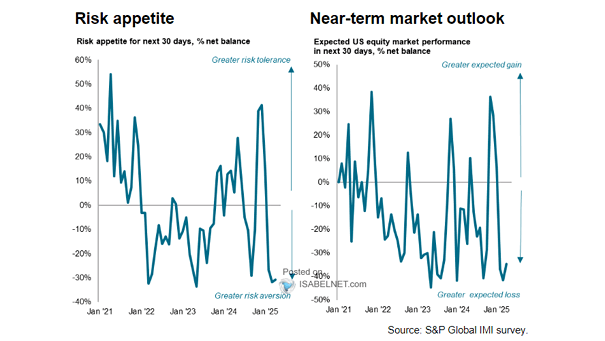
Different Market Sentiment Indicators Risk appetite is neutral, supported by steady global equity inflows. Investors have grown more cautious over the past month. This looks like prudence, not panic. Image: Goldman Sachs Global Investment Research

Nasdaq 100 to S&P 500 Valuation Spread

Nasdaq 100 to S&P 500 Valuation Spread The last time the Nasdaq 100 traded this cheap versus the S&P 500, it staged its biggest outperformance in a year. Honestly, that’s tough to ignore. Image: Bloomberg

Brent Crude Oil Futures

Brent Crude Oil Futures Markets are betting the Middle East conflict won’t drag on, a view reflected in oil futures prices. The curve remains in backwardation, indicating tight near‑term supply but confidence that any disruption…

S&P 500 Index Max Pullback per Calendar Year

S&P 500 Index Max Pullback per Calendar Year Markets are never a straight ride up. Since 1980, the S&P 500 has averaged double‑digit gains while dropping roughly 14% each year. Volatility is simply the cost…

Fed Funds Rate

Fed Funds Rate Markets are now pricing in a meaningful chance of a Fed rate hike in 2026, something that looked very unlikely at the start of the year. Image: MarketDesk Research

U.S. Unemployment Rate and Recessions

U.S. Unemployment Rate and Recessions The unemployment rate moving above its three-year average has preceded every U.S. recession since 1950. The latest crossover came in June 2024. Since then, no recession has followed, raising questions…