Average U.S. 10-Year Treasury Yield Performance After Oil Shocks

Average U.S. 10-Year Treasury Yield Performance After Oil Shocks Historically, sharp oil‑price spikes have often, but not always, been followed by weaker bond performance because higher energy costs push headline inflation and expectations of future inflation higher. Image: Deutsche Bank

U.S. Unemployment Rate Forecast

U.S. Unemployment Rate Softer growth is set to nudge joblessness higher, with U.S. unemployment seen near 4.6% by year‑end and closer to 4.9% under a harsher oil shock scenario. Image: Deutsche Bank

S&P 500 3-Month Option-Implied Volatility

S&P 500 3-Month Option-Implied Volatility Since 2024, the volatility of the average stock in the S&P 500 has been on the rise. Image: Goldman Sachs Global Investment Research
Net Bullish Sentiment vs. S&P 500 Index

Net Bullish Sentiment vs. S&P 500 Index Investor sentiment has turned sharply risk‑averse in recent weeks, as the Middle East conflict and its potential spillovers have made markets more cautious about risk assets. Image: Real Investment Advice

CTAs Exposure to the U.S. Dollar

CTAs Exposure to the U.S. Dollar After betting against the U.S. dollar, Commodity Trading Advisors are easing up on their shorts and edging toward neutral. Few will be surprised as the greenback finds support when the world gets nervous. Image: Deutsche Bank Asset Allocation

Systematic Equity Positioning

Systematic Equity Positioning Systematic strategies have slipped to neutral, with positioning now in the 40th percentile, as higher volatility has triggered a recent bout of de-risking. Image: Deutsche Bank Asset Allocation

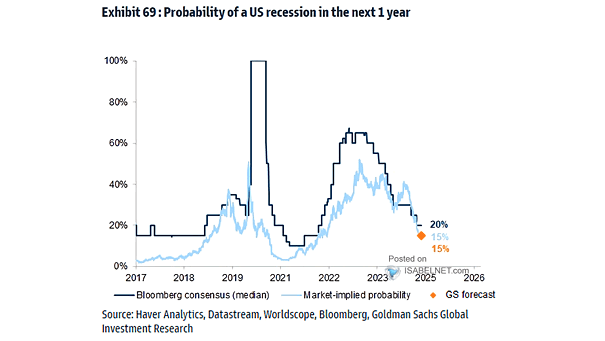
U.S. Recession Probability

U.S. Recession Probability Recession odds in the U.S. have dropped to levels that favor continued growth rather than an imminent slump. Image: Deutsche Bank Research

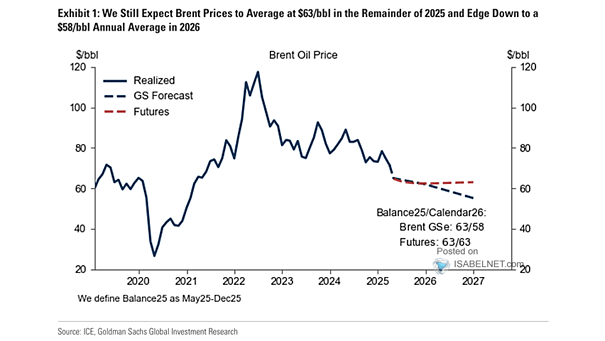
Brent Oil Price Forecast

Brent Oil Price Forecast Goldman Sachs has lifted its 2026 oil price forecast, now seeing Brent crude averaging $85 a barrel and WTI at $79, as disruptions in the Strait of Hormuz keep energy markets on edge. Image: Goldman Sachs Global Investment Research
S&P 500 Returns After 200 Days or More Above the 200-Day MA End

S&P 500 Returns After 200 Days or More Above the 200-Day MA End Losing the 200-day moving average after staying above it for 200 days or more has usually meant a period of consolidation rather than the start of a deep bear market. Since 1950, the S&P 500 has gained 8.3% on average over the…

Aggregate U.S. Dollar Position, Non-Commercial Traders

Aggregate U.S. Dollar Position, Non-Commercial Traders Rising Middle East tensions and a jump in energy prices have pushed speculators back into the U.S. dollar, marking their first net-long position of the year. No surprise there: the greenback usually shines when global risks rise. Image: Bloomberg